International Conference on Urban Traffic Safety
Archived content 2017 - 2019
In 2017 this became the new website for the International Conference on Urban Traffic Safety.
Content is from the site's 2017 -2019 archived pages.
~~~

9th Annual (Edmonton) International Conference on Urban Traffic Safety
August 8-10, 2017 | Banff, Alberta, Canada
JOIN US!
Join us in beautiful Banff National Park and learn from and collaborate with national and international traffic-safety professionals. This year we are hosting a joint conference with the International Conference on Transportation Information and Safety of Wuhan, China.
NOTE that registration cutoff is July 1
International Conference on Urban Traffic Safety
Just as all road users feel the impact of traffic safety, the responsibility to promote traffic safety is shared by many disciplines. This multidisciplinary approach is more evident now than it ever was before. When jurisdictions and agencies refer to Vision Zero Action Plans and Road Safety Strategies, their underlying theme revolves around collaborating with all partners whether they are engineers, enforcement officers, medical professionals, planners, political leaders, or public health representatives.
Keynote At 9th Annual International Conference On Urban Traffic Safety
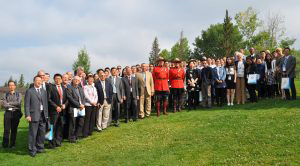
Dr. Mosleh presented a Keynote: "Safety and Reliability of Autonomous Maritime Transportation: Human Still in the Loop" in Banff, Canada this past August. The conference, held in conjunction with the 4th International Conference on Transportation Information and Safety, showcased best innovation, technology, engineering improvements, enforcement efforts, and education and engagement to address current and emerging transportation safety issues.
Message from the Conference Chairs
On behalf of the organizing committee, thank you for attending the 10th Annual International Conference on Urban Traffic Safety from July 9th to the 12th, 2018 at the Shaw Conference Centre in Edmonton, Alberta, Canada.
We look forward to seeing you at the 11th Annual International Conference on Urban Traffic Safety in August, 2019.
Shewkar Ibrahim and Ran Li


Objectives:
- Showcase innovative road design, public education and enforcement efforts
- Share research and best practice on applying global Safe System principles to local applications as we move towards Vision Zero
- Collaborate with international academic institutions in transportation safety
- Network with traffic-safety researchers, practitioners and industry professionals from around the world, develop skills, and forge connections.
Benefits of Attending:

- Keynote Presentations
- Over 24 Concurrent Sessions
- Post-Conference Workshops
- Sponsorship Opportunties
- Exhibit Opportunities
- Network with over 300 Canadian and International Professionals
Vision Zero – Zero Fatalities and Serious Injuries.
"That I attended this event at all was the result of amazing coincidence and serendipity. I was meeting with a client in Edmonton to go over some software issues regarding a new LED traffic light system that was being developed for and marketed to small municipalities in the Midwest. He urgently dragged me along to the conference because he wanted me to meet his partner, who was at the event. They had a nightmare of a headache. Page one of a Google search for the company yielded results that highlighted a number of obviously fake reviews slamming their product as poorly constructed, inefficient, short working life, etc. They knew this was a competitor because the complaints claim they make a superior product. This looked like an industrial turf war being fought online. They had already lined up the legal strategy and the lawyers were already engaged. I know a bit about seo, so they wanted me to advise them on a way to remove those dishonest smears from Google's search results. I know how the reputation management guys do it - they optimize harmless webpages that then outrank the problems. Do this enough times and the problem can be driven off of page 1. From the conference I consulted with an seo guru that runs a service that provides Google search results removals exclusively. His advice was to wait until we saw how effective the lawyers were. This is an expensive service and should only be a last resort. All this happened during the traffic safety event, and although nothing is yet resolved, a plan is in place and solutions are underway. By the way I did manage to hear a very inspirational presentation by Dr. Mosleh on the maritime aspects of traffic safety." Tom Peters
10th International Conference on Urban Traffic Safety, Edmonton, 2018

10th Annual International Conference on Urban Traffic Safety
July 9-12, 2018
The Shaw Conference Centre

The city of Edmonton organized the 10th Annual International Conference on Urban Traffic Safety, which took place with great success on 9-12 July, 2018 in Edmonton, Alberta, Canada. Just as all road users feel the impact of traffic safety, the responsibility to promote traffic safety was shared by many disciplines. This multidisciplinary approach is more evident now than it ever was before. When jurisdictions and agencies refer to Vision Zero Action Plans and Road Safety Strategies, their underlying theme revolves around collaborating with all partners whether they are engineers, enforcement officers, medical professionals, planners, political leaders, or public health representatives.
PRESENTATION: “Risks and Countermeasures for Road Traffic of the Elderly in Europe”

Author (s):
Evelien Polders, Tom Brijs, IMOB – Hasselt University
Eleni Vlahogianni, Eleonora Papadimitriou, George Yannis, NTUA
Franck Leopold, LAB
Concetta Durso, Konstandinos Diamandouros, ERF
Sponsoring Organisation:
European Commission – Directorate-General for mobility and transport (DG-MOVE)
Abstract:
By 2050, one in four people will be aged 65 or over. The aging of the population coincides with an increase in older road users since far more elderly will actively participate in traffic. As a result, the road safety situation of the elderly will also change since the normal ageing process makes people more prone to experience functional declines that can make driving a car more difficult. The fatal accident risk for elderly cyclists and pedestrians is also many times higher than for elderly car drivers.
In the light of these challenges, this report has explored the road safety risks and main trends for older road user groups (drivers, passengers and pedestrians). Fragility, illnesses and functional limitations, urban roads, walking and medication appear to be the key risk factors of elderly road users. A comprehensive and proactive strategy is required to address these risk factors and meet the safety and mobility needs of elderly road users in the (near) future. This strategy will include all policy levels and needs to apply a “design for all” approach based on a package of interventions in the area of infrastructure, education & training, licensing & enforcement and vehicle & ITS technologies.
Preface
This report is the final report of the EU ElderSafe study, “Risks and countermeasures for road traffic of the elderly in Europe” (contract period: 2015) funded by the European Commission DG MOVE. The report is a state-of-the-art report that complements current knowledge with new insights about the safety and mobility of elderly road users.
The purpose of this study is to provide a clear view on the situation of elderly road users in traffic and to provide an action plan containing recommendations for the most promising measures to be taken at the EU-level in order to enhance the road safety of the elderly in the (near) future. This strategy is developed by:
- Assessing the main trends and road safety risks for all older road user groups (drivers, passengers, pedestrians),
- Providing an overview and analysis of various countermeasures, including ITS, aimed at increasing road safety for all older road user groups.
All ElderSafe consortium members contributed to the report by writing chapters of the report (authors), organizing the stakeholders’ consultation process and/or commenting earlier versions of this report.
The ElderSafe consortium expresses its gratitude to all the participants to the workshop held in Brussels on the 5th of June 2015 for the active and fruitful discussions and wishes to thank all the respondents to the survey for their valuable inputs.
Executive summary
In the coming years, Europe is facing a significant shift in the age distributions of populations. Currently, elderly make up 18% of the European population. However, due to the decline in birth rates, the ageing of the baby-boom generation and the increased longevity; 24% and 28% of the population will be aged ≥ 65 years in 2030 and 2050 respectively. Due to these demographic changes, more elderly will actively participate in traffic. An increased proportion of elderly road users in traffic will bring a significant increase in the number of elderly road users who are at risk of being involved in road accidents. While at the moment one road traffic fatality out of five is aged 65 or over in Europe, it is expected that by 2050 one road traffic fatality out of three will be an older person which is an increase of 13%. Therefore, the aim of the “Risks and countermeasures for road traffic for the elderly in Europe” project (in short: ElderSafe) funded by the European Commission DG MOVE is to provide an action plan containing recommendations for the most promising measures to be taken at the EUlevel in the light of developing a proactive strategy to enhance the road safety of the elderly in the (near) future. This strategy is developed by:
- Assessing the main trends and road safety risks for all older road user groups;
- Providing an overview and analysis of various countermeasures, including ITS, aimed at increasing road safety for all older road user groups.
However, it is not always straightforward to reduce or eliminate the negative effects of certain risk domains since interventions in some risk domains may receive a strong public support or result in greater safety benefits. Therefore, the following risk domains require prior attention because they have the strongest impact on the reduction of serious traffic casualties among the elderly, and because they receive a strong support by the public in terms of countermeasures:
.....more...GO TO: https://ec.europa.eu/transport/road_safety/sites/roadsafety/files/pdf/studies/eldersafe_final_report.pdf

2019 International Conference on URBAN TRAFFIC SAFETY
Join us on August 21-23 for Edmonton’s 11th International Conference on Urban Traffic Safety!
The conference will provide attendees with the opportunity to network with traffic-safety researchers, practitioners and industry professionals from around the world, develop skills, and forge connections. Concurrent sessions and presentations will showcase innovative road design, public education and enforcement efforts, while sharing research and best practice on applying Global Safe System principles to local applications as we move towards Vision Zero.
We look forward to seeing you in August 2019 at:
Edmonton Convention Centre
9797 Jasper Ave
Edmonton, AB T5J 1N9

We camp with bison, party under the aurora, and surf on the prairies. We've always done things a little differently and welcome you to be a part of it.
Steering Committee
The 2019 Annual International Conference on URBAN TRAFFIC SAFETY is guided by the Traffic Safety section, City of Edmonton, with the expertise of the steering committee.

Reasons why you should attend:
- *Over 24 concurrent sessions
*Keynote presentations
*Sponsorship opportunities
*Network with over 300 Canadian and International Professionals
*And more!
For more information on the 2019 conference program and invited speakers, please visit their website
Event Details:
Dates: Wednesday, August 21 – Friday, August 23
Tickets:
For inquiries about the 2019 conference, please contact the Urban Traffic Safety Conference directly at trafficsafetyconference@edmonton.ca or (780) 495-0368.

Co-Chairs
Robert Hassel, City of Edmonton, Traffic Safety Section
Laura Thue, City of Edmonton, Traffic Safety
City Operations Internal Members
Gerry Shimko, Executive Director, City of Edmonton, Traffic Safety
Dennis Tetreault, City of Edmonton, Traffic Safety
Joann Green, City of Edmonton, Traffic Safety
External Members
Karim El-Basyouny, University of Alb
Past Event Programs
Edmonton’s International Conference on URBAN TRAFFIC SAFETY catalogue of successful programs for:
2018 – Traffic Safety Conference
2017 – Traffic Safety Conference (Banff) Program
2016 — Towards Vision Zero: Zero Fatalities and Serious Injuries
2015 — Building SAFER Communities Through the Safe SYSTEM Approach
2014 — Innovation in Urban Traffic Safety: Working Smarter to Save Lives
2013 — Transformational Leadership In Traffic Safety Building Urban Traffic Safety Culture
2012 — Building Safer Communities: Interdisciplinary Approaches To Improving Urban Traffic Safety
2011 — Moving Forward: Creative Approaches To Improving Urban Traffic Safety In Our Communities
2010 — Improving Traffic Safety: Championing Collaboration for Success in Our Communities
2009 — Improving Urban Traffic Safety through Evidence-Based Decision Making: Achieving Success in Our Communities
More Background On UrbanTrafficSafetyConference.com
UrbanTrafficSafetyConference.com served as the digital hub for one of North America’s most respected recurring gatherings dedicated to roadway risk reduction, multidisciplinary safety collaboration, and the advancement of Vision Zero principles. Active in its most visible form from roughly 2017 through 2019, the website documented programming, leadership, research priorities, and institutional partnerships tied closely to the City of Edmonton’s Traffic Safety Section and its international network of engineers, academics, enforcement professionals, and public-health advocates.
While many professional conferences speak broadly about safety, this event distinguished itself through practical implementation, municipal leadership, and cross-border knowledge exchange. The site captured a moment when urban transportation agencies were rapidly transitioning from traditional collision mitigation toward systemic approaches grounded in human vulnerability, data science, and inclusive street design.
What follows is a full orientation to the conference, its origins, its stakeholders, and its significance.
Origins and Institutional Framework
The International Conference on Urban Traffic Safety did not emerge overnight. By the time the 2017–2019 editions appeared online, the gathering had already been running for nearly a decade.
The conference lineage reaches back to earlier Edmonton-led initiatives beginning in the late 2000s. Over time the event matured from a regional professional meeting into an internationally recognized forum aligned with Safe System philosophy. That philosophy assumes humans will make mistakes and therefore transportation networks must be designed so those mistakes do not result in death or serious injury.
The City of Edmonton played a central convening role. Municipal governments are uniquely positioned between provincial/state regulation and street-level execution. Edmonton’s traffic safety office leveraged this position to attract global researchers while keeping the agenda grounded in deployable practice.
By the time UrbanTrafficSafetyConference.com launched, the event had already built credibility among transportation departments, universities, consulting engineers, and non-governmental organizations.
The Banff Gathering and the Conference’s Expanding Identity
One of the most memorable years documented on the site was the 2017 conference held in Banff, Alberta. Hosting in the national park signaled two things: international ambition and experiential appeal. Delegates were not only attending lectures; they were participating in an immersive professional community.
The Banff edition also reflected collaboration with partners from China, demonstrating the conference’s widening geographic reach. Joint programming with global institutions mirrored broader recognition that urban safety challenges—aging populations, vulnerable road users, automated technologies—transcend borders.
Vision Zero as the Unifying Theme
Across all archived years, Vision Zero anchored the narrative.
Rather than framing traffic deaths as unfortunate inevitabilities, Vision Zero treats them as preventable system failures. The conference continually emphasized:
-
shared responsibility
-
design for human error
-
speed management
-
protection of pedestrians and cyclists
-
integration of engineering, education, and enforcement
Municipal representatives came seeking applied strategies. Researchers arrived with evaluation methods. Industry participants explored technology deployment. The website highlighted this convergence repeatedly.
Multidisciplinary Audience
One reason the conference gained traction was its deliberate diversity of participants.
Typical attendees included:
-
transportation engineers
-
police and enforcement agencies
-
injury-prevention specialists
-
trauma and emergency professionals
-
planners and urban designers
-
ITS and data experts
-
academics
-
government leadership
Bringing these groups together prevented siloed thinking. A roadway redesign conversation might include hospital data. An enforcement initiative might incorporate behavioral research. The program structure encouraged cross-pollination.
What Participants Experienced
UrbanTrafficSafetyConference.com consistently promoted several hallmarks:
Keynote presentations
High-profile speakers addressed future risks, automation, and systemic reform.
Concurrent sessions
More than two dozen panels allowed deep dives into specialty topics.
Workshops
Post-conference intensives supported skill building and implementation.
Exhibits and sponsors
Technology vendors and service providers demonstrated tools for municipalities.
Networking
With roughly 300+ professionals, the event offered rare access to peers facing similar challenges.
Research Spotlight: Aging Road Users
Among the most substantive materials associated with the conference were presentations addressing demographic change. Europe’s ElderSafe initiative, frequently referenced during conference programming, examined how increased longevity reshapes traffic risk.
The findings were sobering: fragility, medication, slower reaction times, and urban walking environments significantly elevate fatality exposure. Solutions therefore require infrastructure adaptation, vehicle technology, and policy reform.
By platforming such research, the conference tied local planning decisions to global demographic reality.
Leadership and Governance
The event was guided primarily by Edmonton’s Traffic Safety Section, supported by internal executives and external academic voices. Named chairs and committee members changed year to year, but the structure ensured both operational competence and scholarly credibility.
Municipal stewardship also reinforced trust. Participants knew the event was mission-driven rather than commercially speculative.
Venues and Civic Integration
From Banff to the Shaw Conference Centre and later the Edmonton Convention Centre, venue selection reinforced accessibility, professionalism, and civic pride. Hosting within prominent downtown infrastructure allowed delegates to observe Edmonton’s own mobility systems firsthand.
Cities effectively became living laboratories.
International Reach
Despite municipal leadership, the audience was global. Speakers and delegates arrived from Europe, Asia, and the United States. Collaborative programming with Wuhan partners demonstrated bilateral exchange, particularly around data, enforcement modernization, and smart-transportation infrastructure.
Such partnerships amplified the conference’s stature far beyond Canada.
Industry and Technology Presence
The late 2010s were a period of rapid ITS growth. Automated enforcement, connected-vehicle research, and analytics platforms were becoming mainstream policy considerations.
Vendors used the conference to:
-
demonstrate pilot outcomes
-
meet procurement officials
-
build academic partnerships
-
interpret regulatory direction
The website frequently emphasized exhibition opportunities as part of the draw.
Education, Culture, and Public Messaging
Beyond technical sessions, organizers stressed communication with citizens. Public acceptance is essential for speed reductions, redesigns, and enforcement changes.
Workshops often addressed:
-
framing safety narratives
-
community outreach
-
political leadership
-
media engagement
This cultural component separated the event from purely engineering conferences.
Testimonials and Professional Reality
Anecdotal accounts associated with the conference illustrated how complex professional ecosystems intersect. Conversations ranged from infrastructure reliability to digital reputation, legal coordination, and procurement risk.
These side stories highlighted the real-world pressures facing transportation innovators. The conference functioned not just as a classroom but as a strategic meeting ground.
Program Continuity
By 2019, the event could point to more than ten consecutive years of themes, from evidence-based decision making to transformational leadership. That historical arc demonstrated institutional memory and evolving sophistication.
Returning participants could measure how ideas matured from theory to deployment.
Why the Conference Mattered
Urban traffic fatalities remain one of the most persistent public-health challenges worldwide. Conferences often promise inspiration; fewer deliver operational alignment.
This event mattered because it connected:
-
policy with practice
-
data with design
-
global insight with municipal authority
Its location within a working city ensured discussions translated into action.
Popularity and Reputation
Attendance figures, repeat sponsorships, and international partnerships all indicate strong professional regard. While not a consumer event, within the transportation-safety community the conference became a recognized annual milestone.
Researchers timed paper releases around it. Vendors scheduled demonstrations accordingly. Municipalities used it for benchmarking.
Legacy of the Website
UrbanTrafficSafetyConference.com now serves primarily as an archive, yet its value remains significant. It captures how late-2010s safety thinking coalesced around Safe System implementation just before the global pandemic reshaped travel behavior.
For historians of mobility policy, the site documents a transitional era between traditional engineering models and integrated, human-centered frameworks.
UrbanTrafficSafetyConference.com represented far more than event marketing. It chronicled the ambitions of a city seeking to lead internationally while learning collaboratively. Through recurring programming, multidisciplinary engagement, and commitment to Vision Zero, the conference helped shape professional discourse during a pivotal moment in transportation safety.
Its influence persists in municipal strategies, academic partnerships, and the global normalization of system-based thinking about road risk.
